Rudyard Kipling Just So Stories, Signed, Ninth Impression (1919) Macmillan
Rudyard Kipling’s Just So Stories for Little Children remains one of the most enduring works of children’s literature of the twentieth century. First published in 1902 and illustrated by Kipling himself, the collection contains some of his best-known stories, including How the Camel Got His Hump, How the Leopard Got His Spots and The Elephant’s Child.
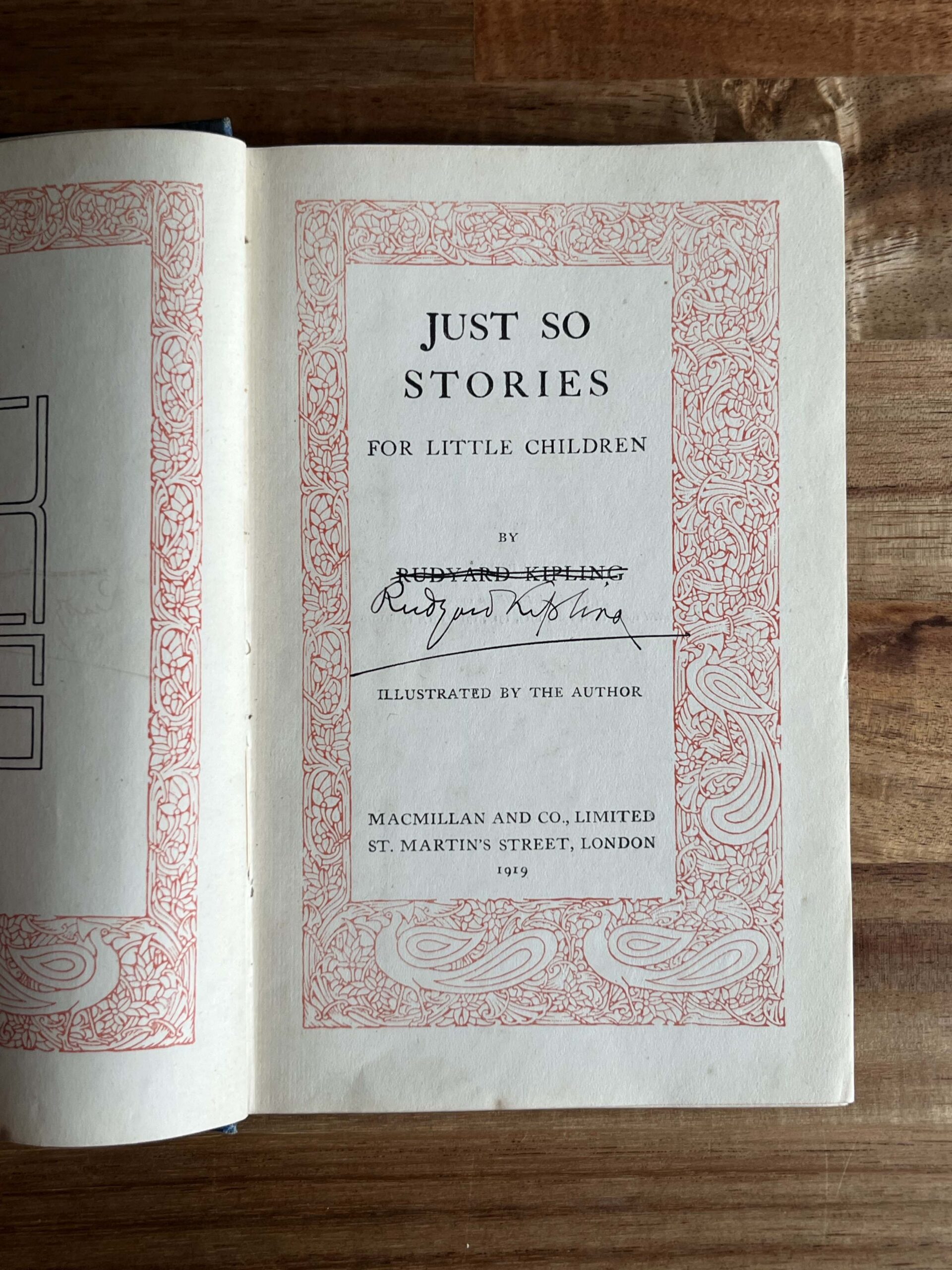
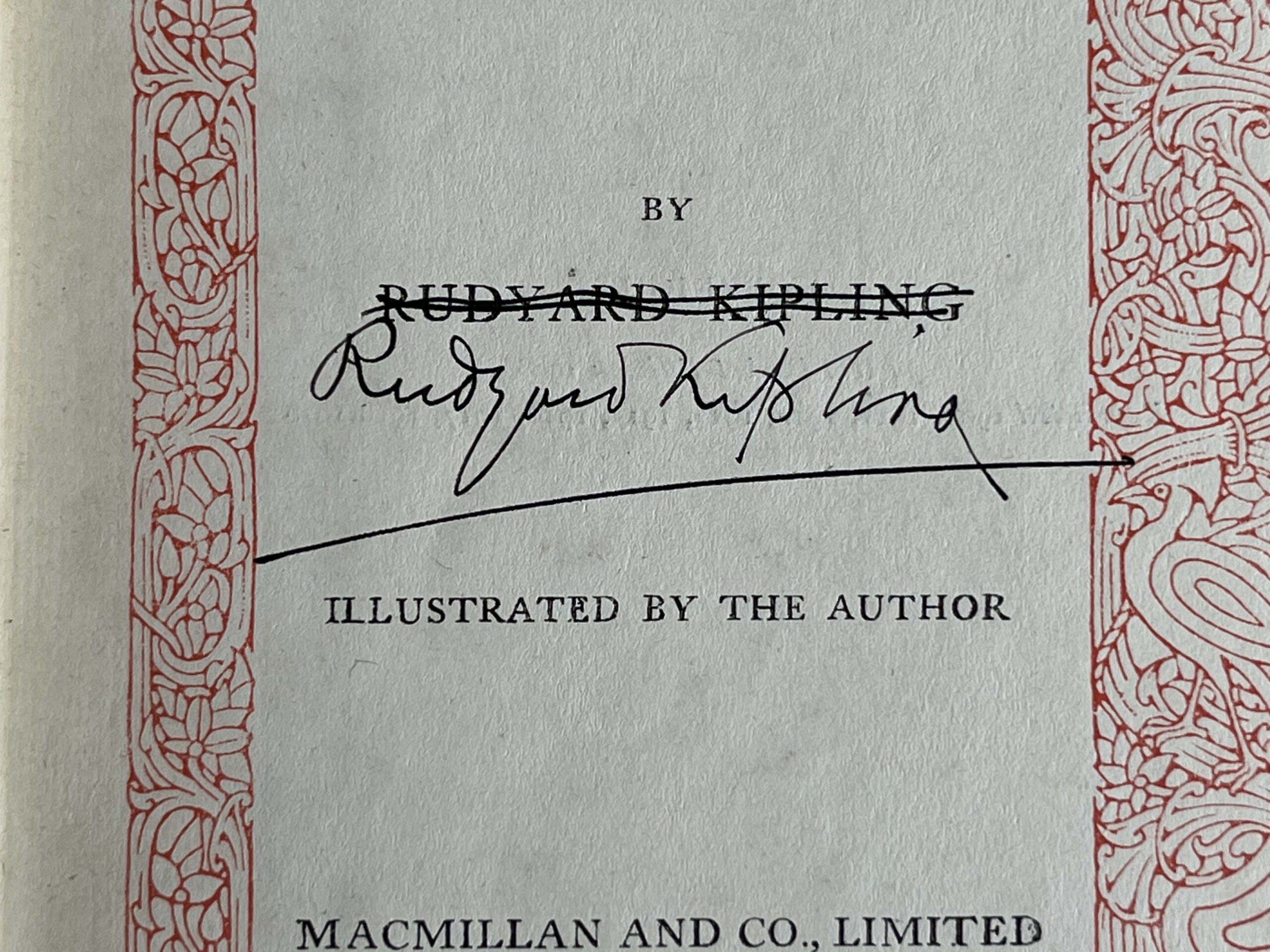
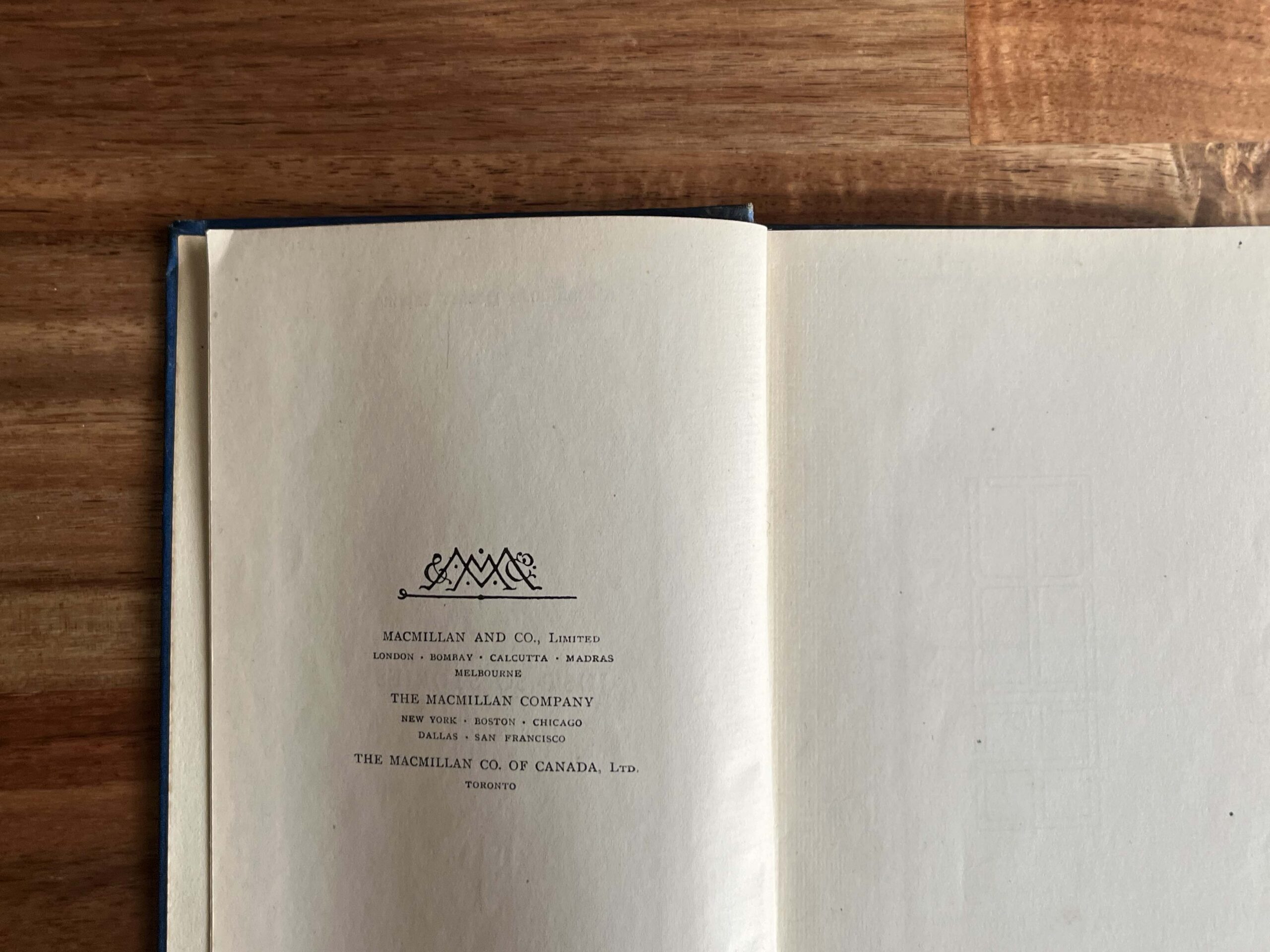
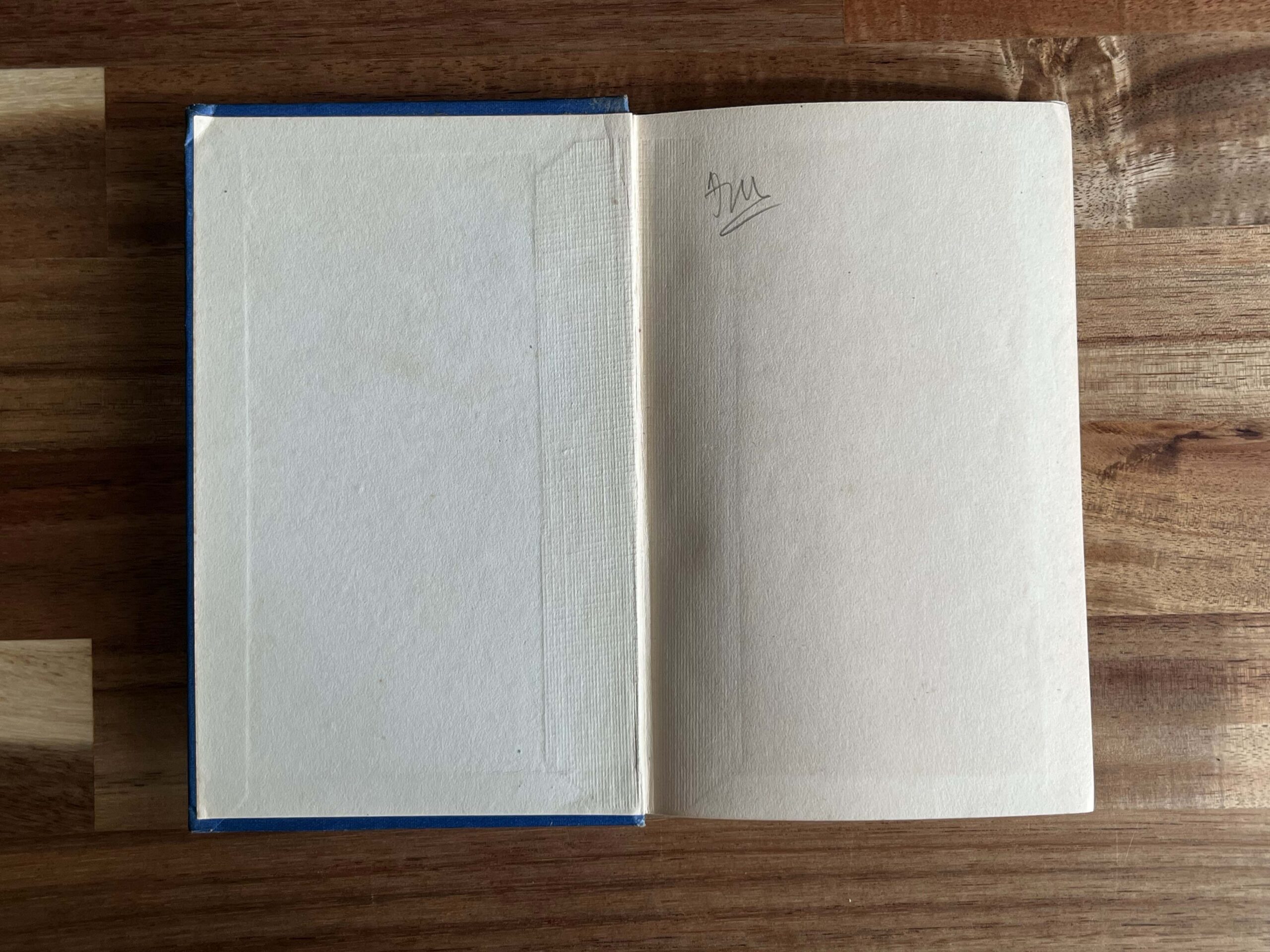
This copy is a ninth impression published by Macmillan in 1919 and is signed by Rudyard Kipling on the title page. The signature displays Kipling’s characteristic practice of striking through his printed name and signing immediately beneath in ink. The signature remains bold, attractive and clearly legible.
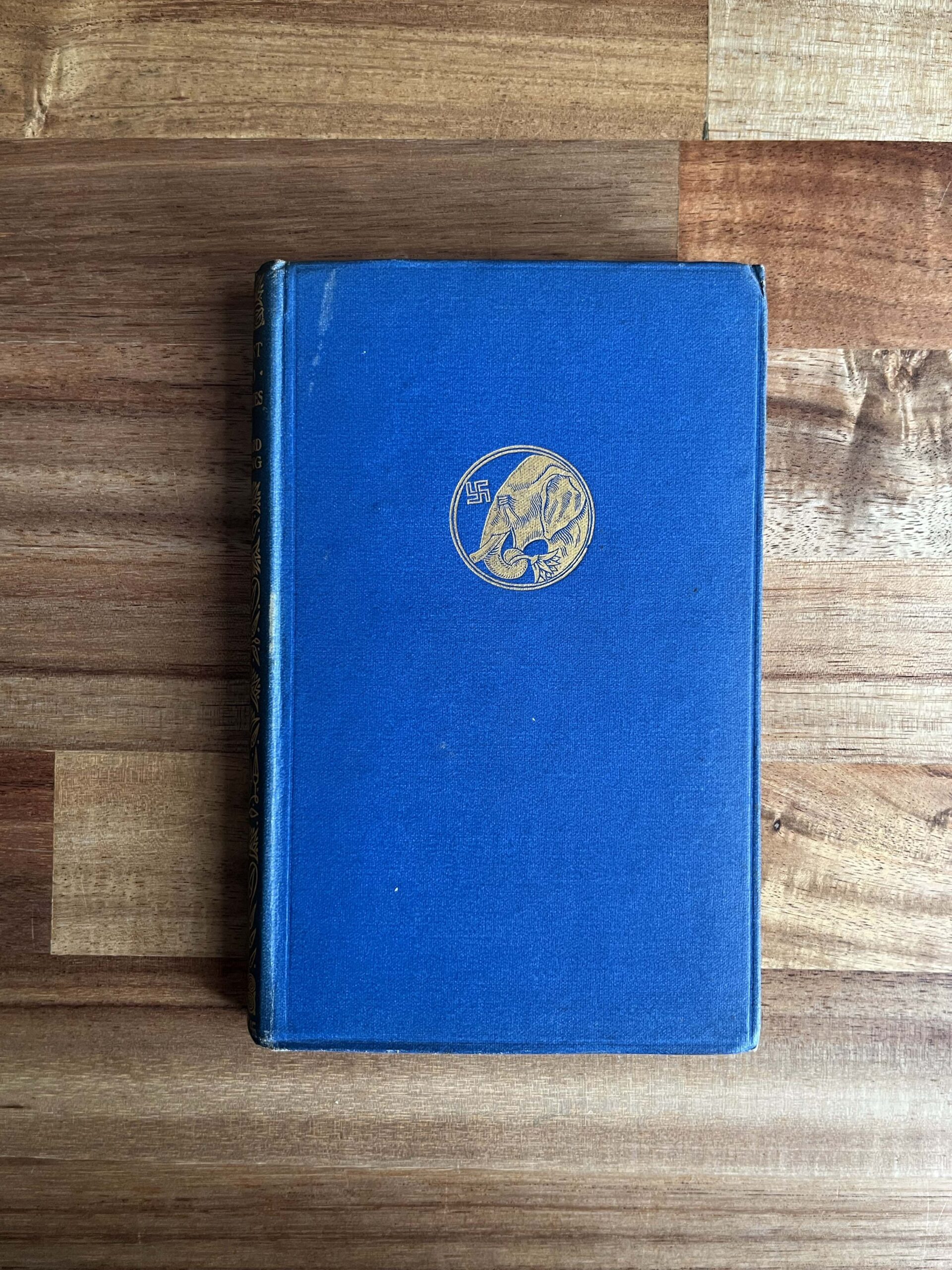
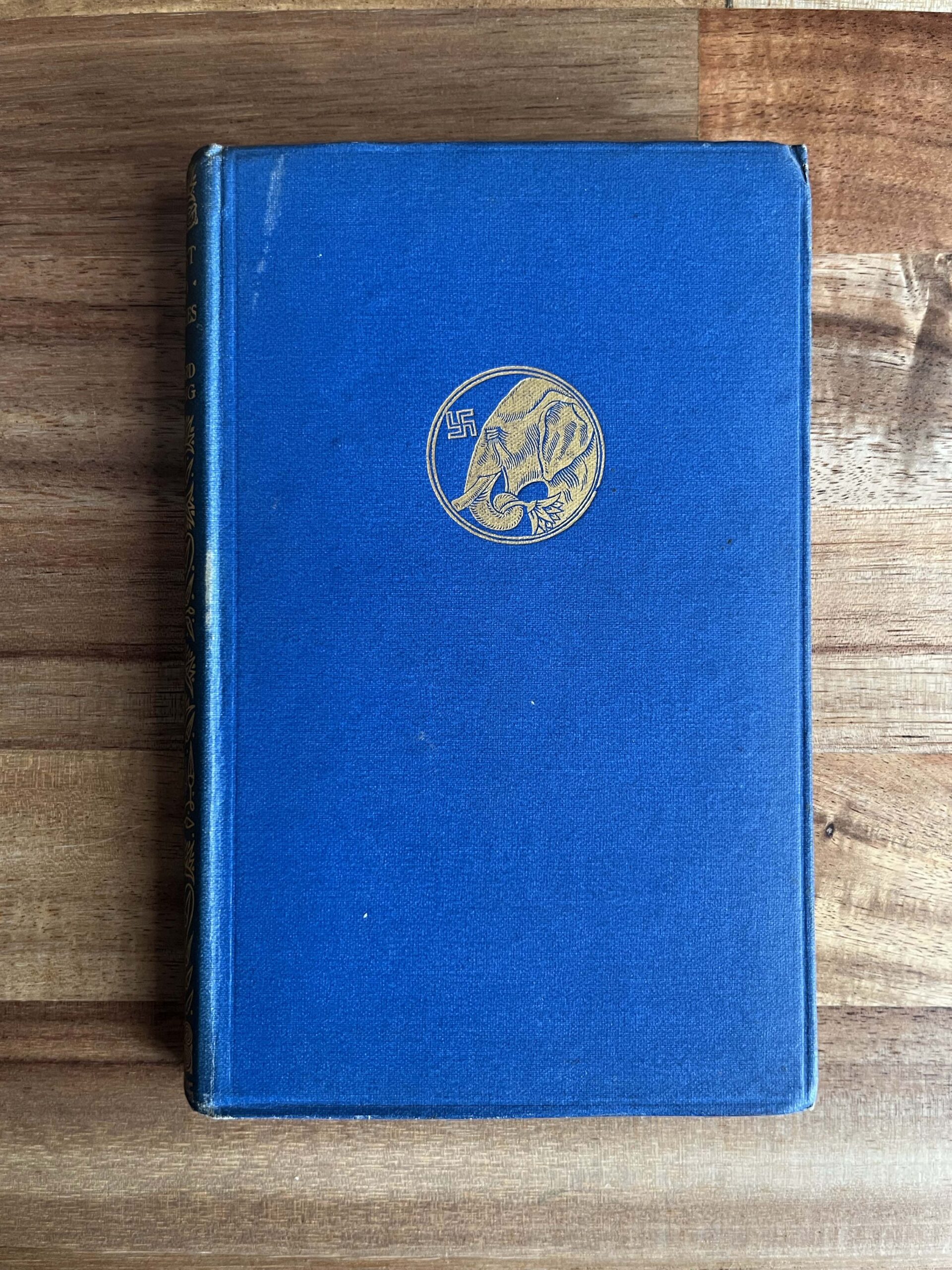
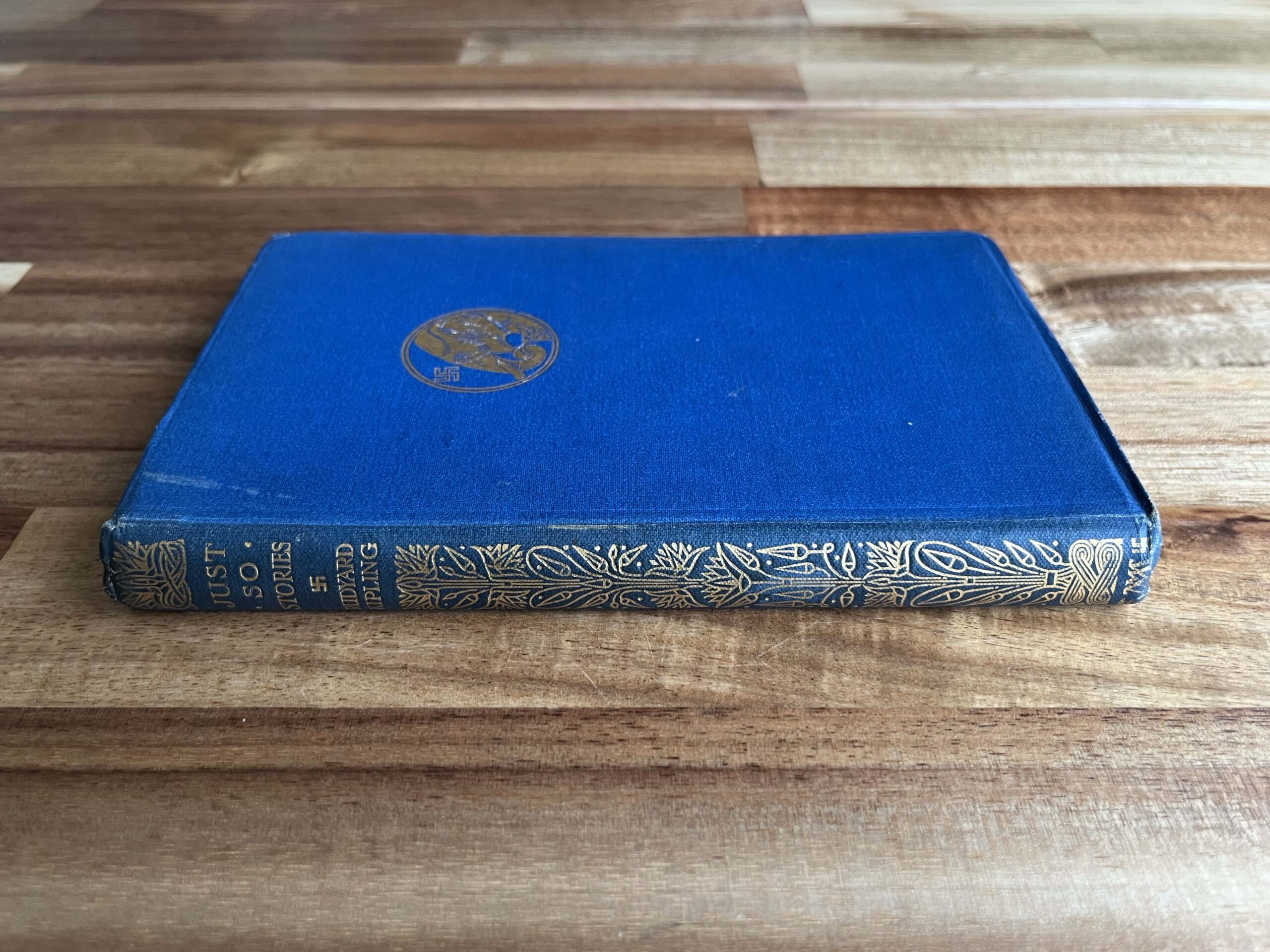
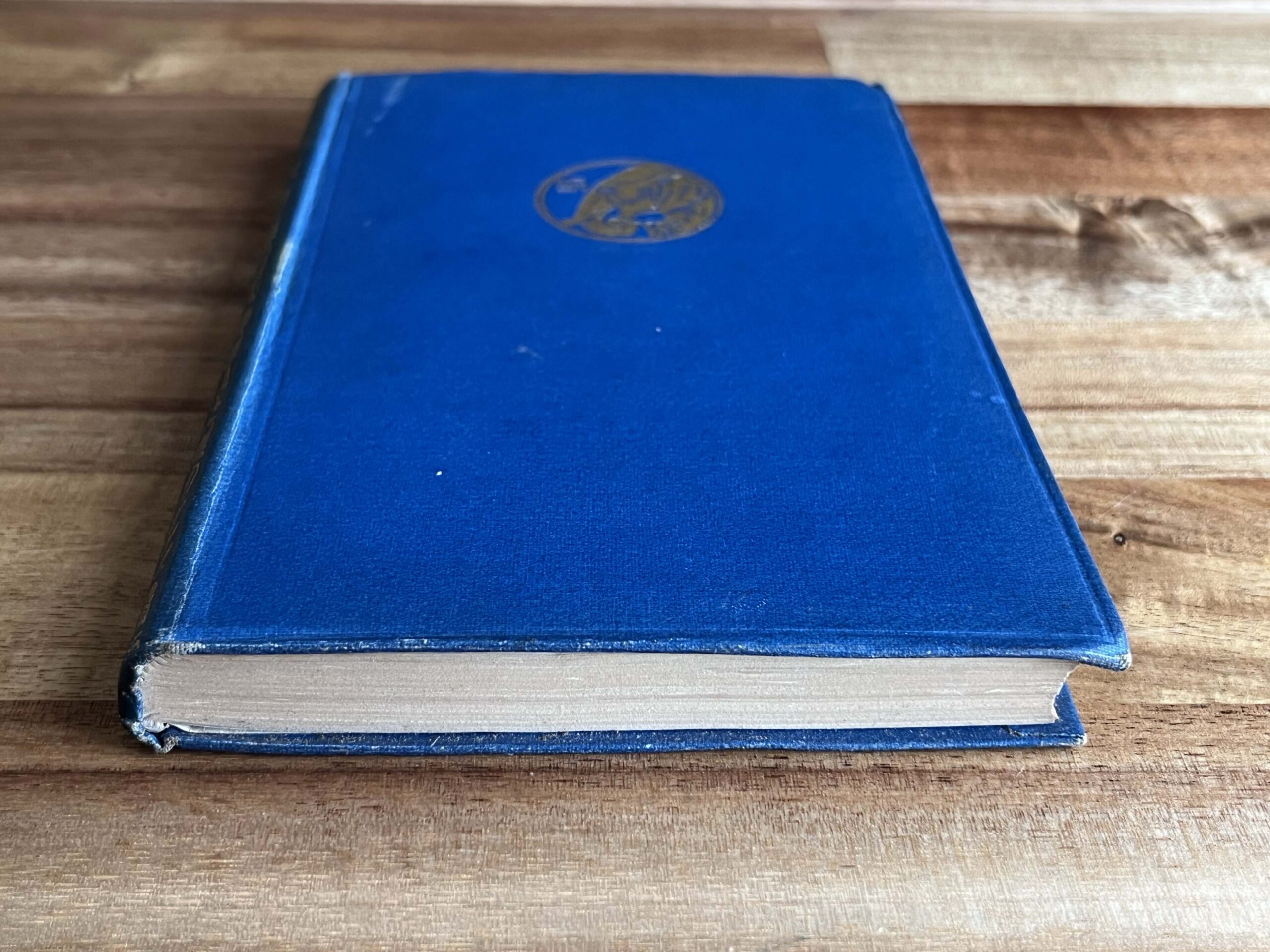
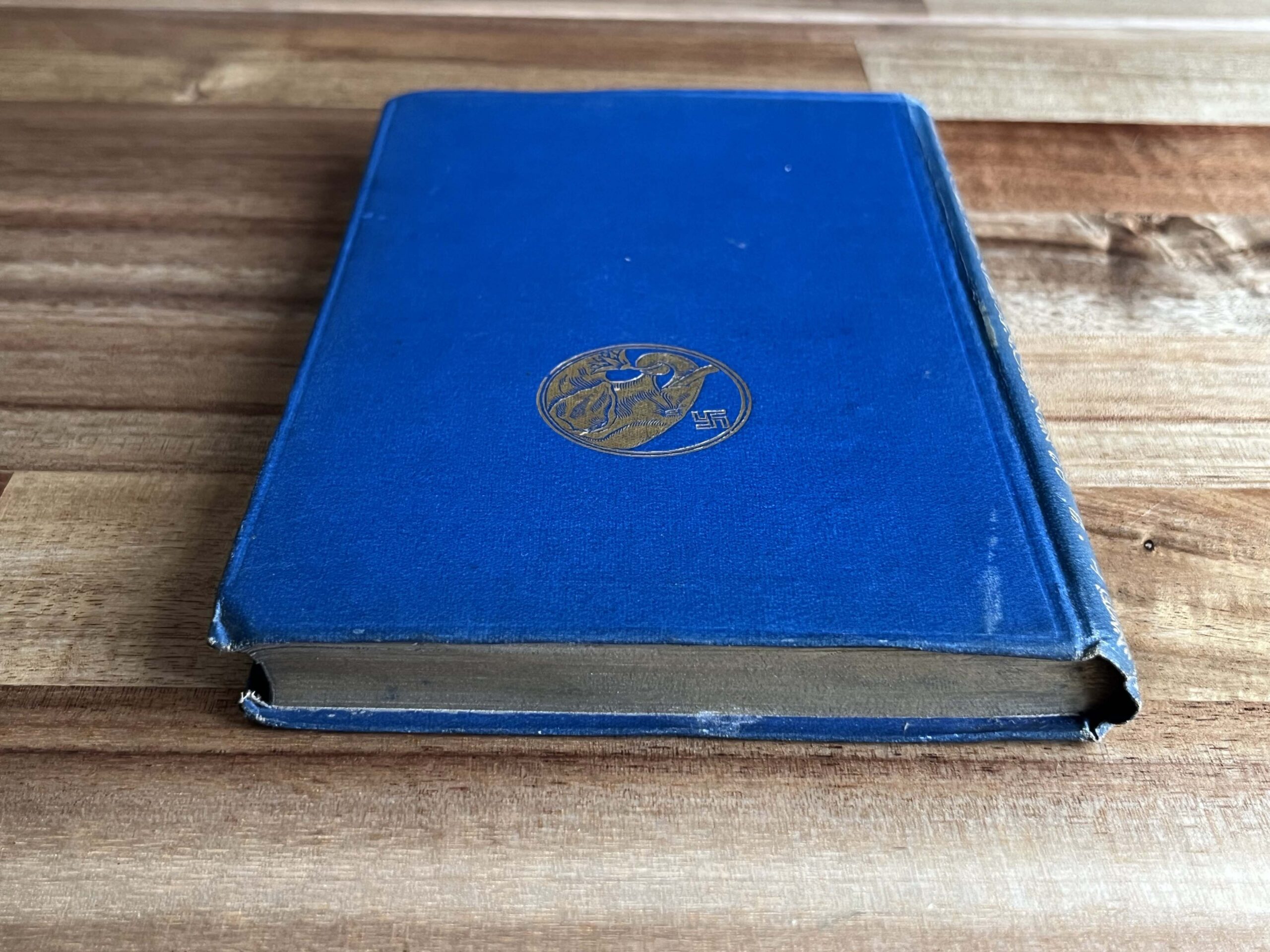
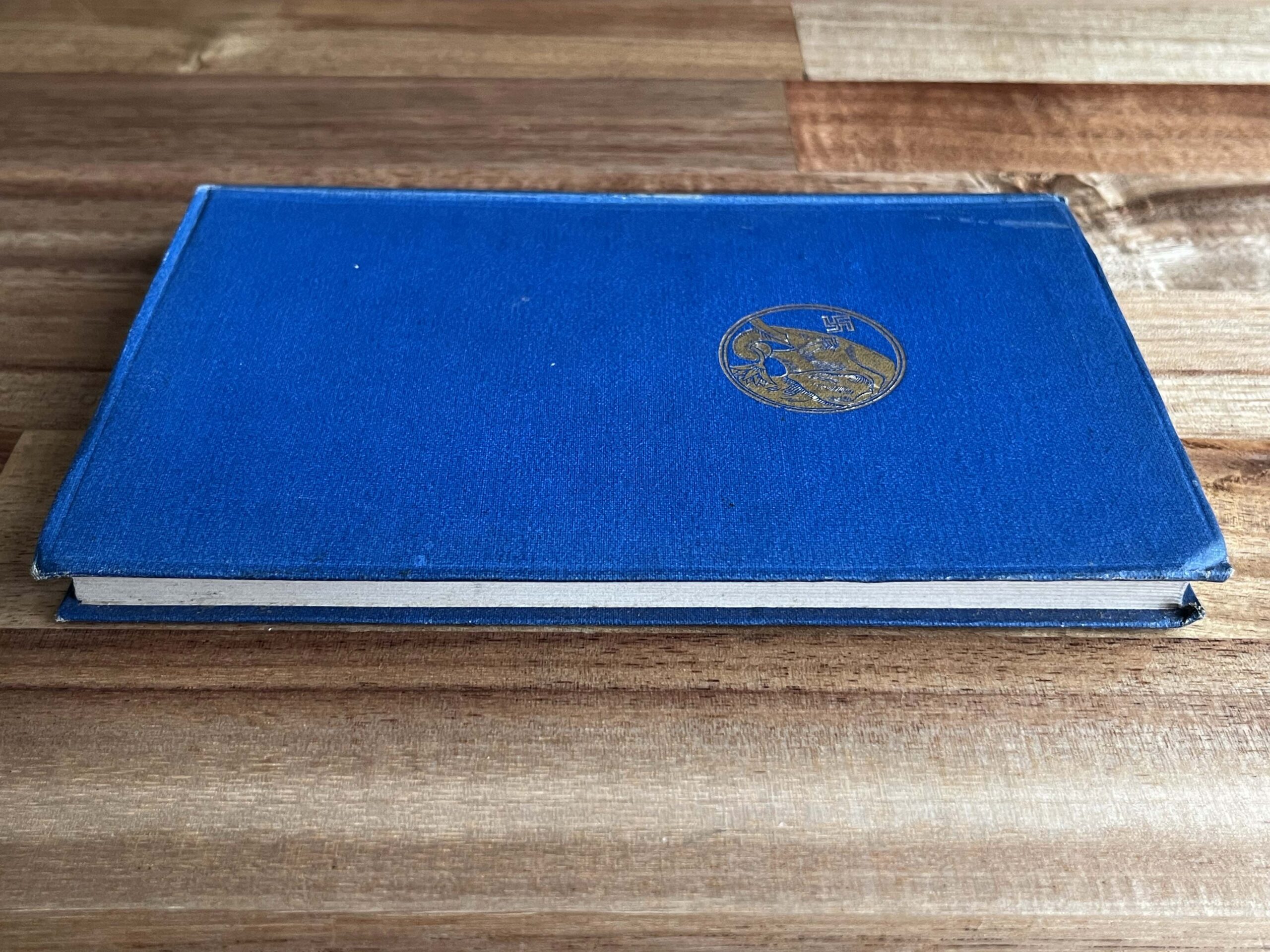
The book retains its original blue cloth binding with gilt decoration to the front board and spine. Of particular interest is the gilt elephant roundel incorporating a swastika motif, a symbol used by Kipling long before its later political appropriation in Germany. Kipling’s use of the symbol reflected its traditional Indian association with good fortune and wellbeing, and appeared on numerous editions of his books during the early twentieth century. Following the rise of National Socialism, Kipling instructed that it should no longer appear on his publications.
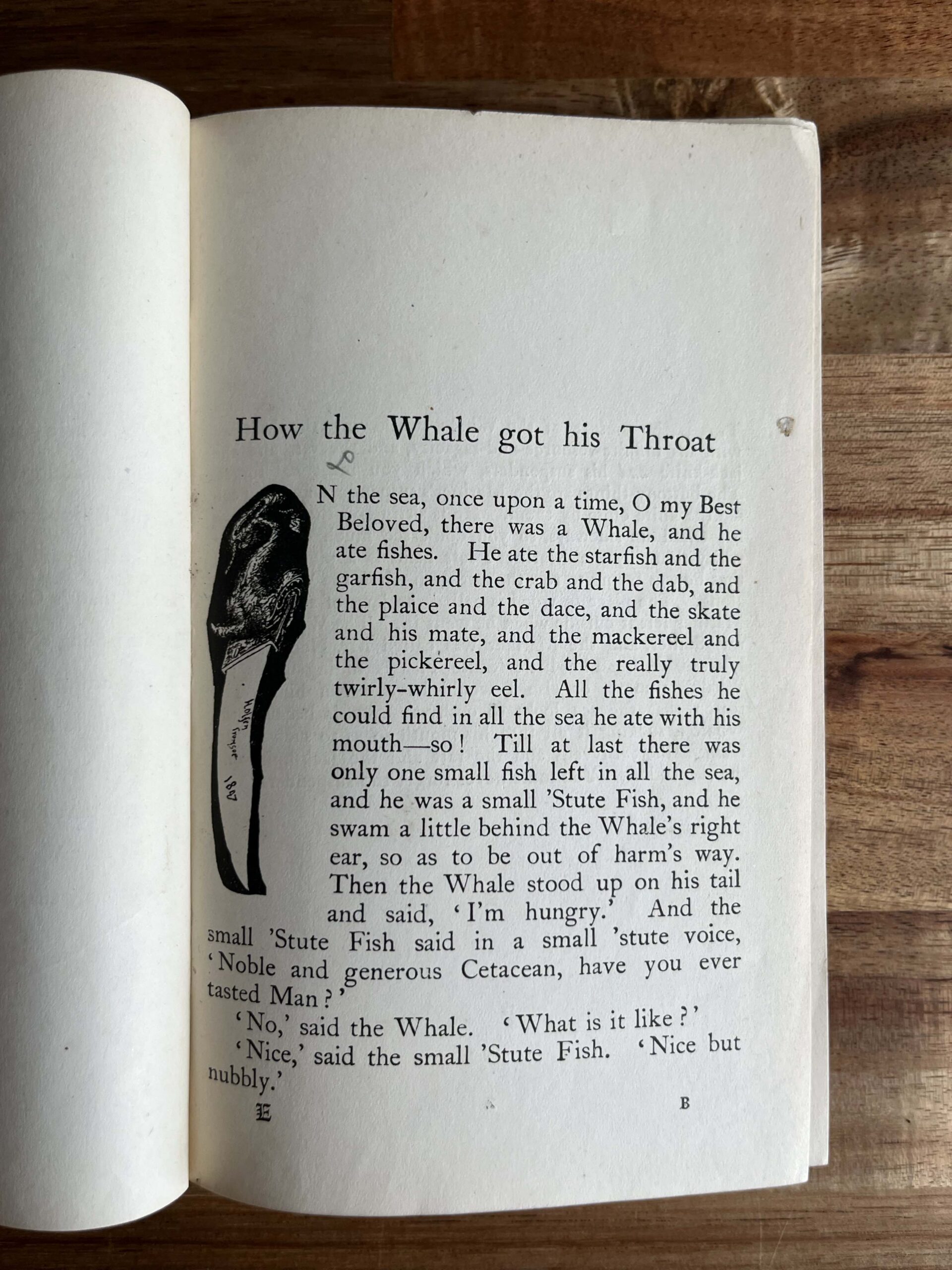
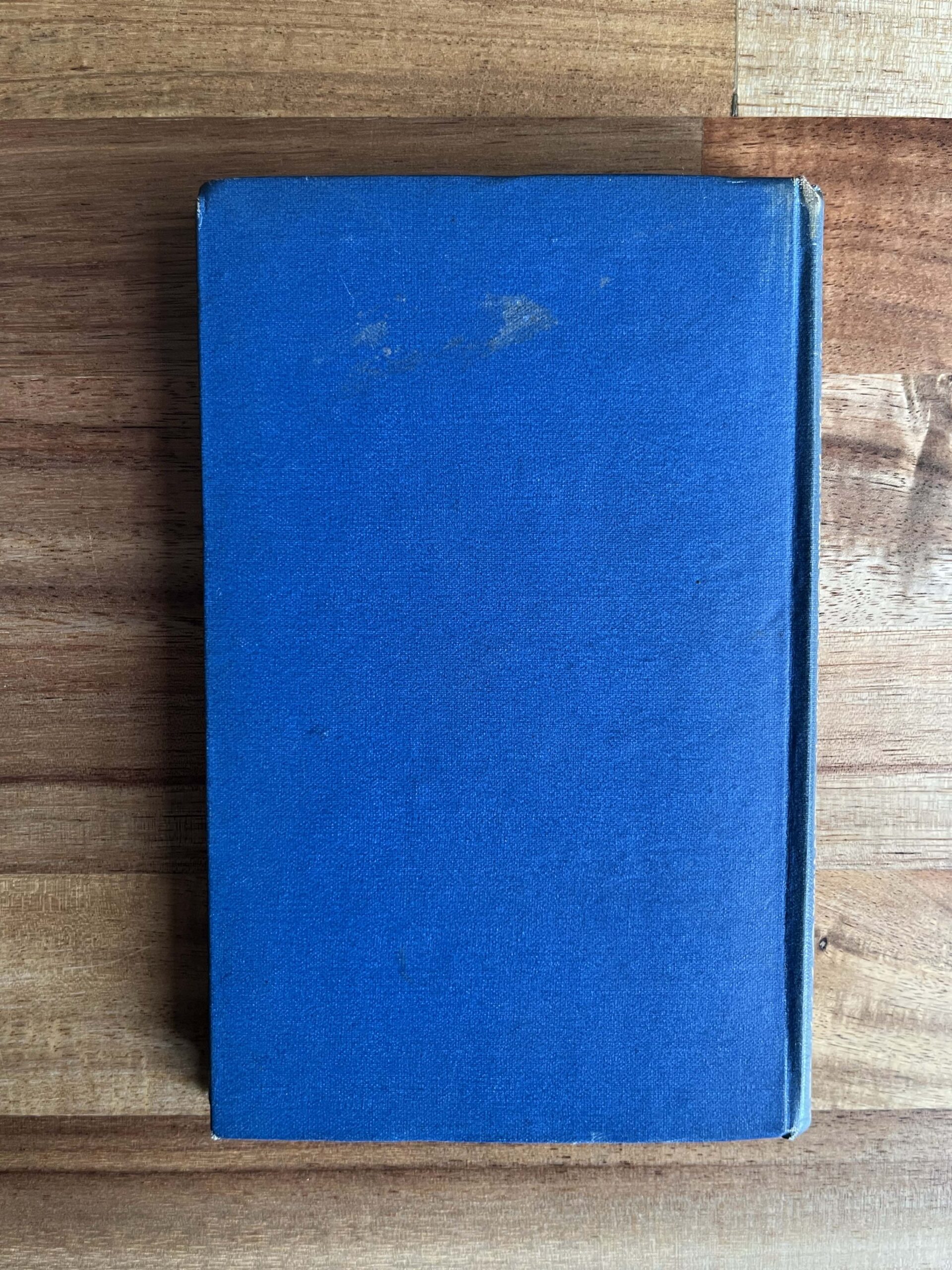
The surviving gilt remains bright and attractive. The binding shows expected shelf wear, rubbing and bumping to corners and extremities, together with some marking and fading to the cloth. Internally, however, the book is exceptionally well preserved, with bright, clean pages and a particularly strong presentation of the signed title page. The text block remains firm and the volume presents as a well-cared-for copy.
No dust wrapper is present. This is not unusual for a children’s title of this period, and the majority of surviving copies are encountered without the original jacket. While a signed example retaining its original wrapper would command a considerable premium, this remains an attractive and highly collectable signed copy in its original cloth binding.
The book was acquired from a sale describing it as having descended through Winifred Moulder, daughter of Frederic Moulder, long-time manager of the celebrated Paris bookseller Librairie Galignani. Founded in the nineteenth century, Galignani became one of the most important English-language bookshops in continental Europe and was closely associated with generations of writers, collectors and expatriate readers in Paris. While the provenance cannot establish a direct connection between Kipling and the Moulder family, it provides an interesting and appealing association with one of the most famous names in the European book trade.
A desirable signed example of one of Kipling’s most loved works, combining a strong author signature, attractive original binding and noteworthy literary provenance.
Condition Report
Very Good overall.
Original publisher’s blue cloth with gilt decoration. Rubbing and bumping to corners, spine ends and board edges, with some marking and fading to the cloth. Binding sound and square. Internally exceptionally clean with bright pages and a bold, attractive Kipling signature on the title page. No dust wrapper. A Very Good copy with VG- binding and VG+ to Near Fine internal condition.
£950.00